
In a letter to an editor, J.R.R. Tolkien explained that while there are similarities one can draw between the gospels and his work, his work was far more limited in its scope:
The Incarnation of God is an infinitely greater thing than anything I would dare to write. Here I am only concerned with Death as part of the nature, physical and spiritual, of Man, and with Hope without guarantees.1
There are many other central themes to Tolkien’s writing: friendship,2 the blessing (and danger) of power,3 the distorting consequence of sin,4 and many more.
But Death and (uncertain) Hope are what Tolkien believed to be the two major themes of his entire corpus. Which is why most of Tolkien’s writing is suffused with a kind of melancholy.
Think of the Ents’ final march to Isengard; the dwindling Rohirrim driven back into Helm’s Deep; the exhausted forces of Gondor assaulting the Black Gate; and, above all, the despair of two hobbits, wandering like lost children in the Land of Shadow.
All of these tragic heroes are aware that they are entering a fight they cannot win, against an enemy they cannot beat, certain that they will most likely perish in the undertaking.
Outside there was a starless blackness as Gandalf, with Pippin beside him bearing a small torch, made his way to their lodging.
‘Tell me,’ he said, ‘is there any hope? For Frodo, I mean; or at least mostly for Frodo.’
Gandalf put his hand on Pippin’s head. ‘There never was much hope,’ he answered. ‘Just a fool’s hope, as I have been told.’5
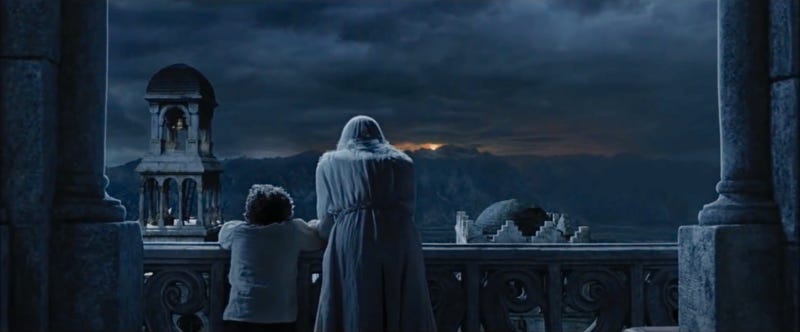
With this kind of bleak perspective, why do so many readers return to Tolkien’s trilogy as a well of hope, beauty, and goodness? Why does it seem like lembas to stave off the nihilism of our day? Like the light of Galadriel to push back despair?
In The Hobbit, Bilbo and the dwarves are lost in the spider-infested Mirkwood. The forest is dark and the grey undergrowth is so dense and labyrinthine that the company begins to descend into a claustrophobic craze. So, Bilbo climbs a tree and pops his head above the green canopy to get a sense of where they are. His eyes are dazzled by the light. A gentle breeze rolls by and he inhales deeply, and finally he opens his eyes:
“He saw all round him a sea of dark green, ruffled here and there by the breeze; and there were everywhere hundreds of butterflies.”6
That’s what it feels like to read Tolkien: lost wanders emerging from the dark stuffy gloom into unexpected beauty, light, and direction. Our modern world is suffocatingly small. Stepping into Middle-Earth is breaking through into the expansive grandeur of Ultimate Reality.
This will be the first in a series of posts on how Tolkien’s writing presents an imaginative blueprint for how Christians can walk the narrow path of Christ and categorically, decisively, and intentionally reject the despair they will inevitably feel.
The Folly of (Worldly) Wisdom
Another major theme in the trilogy is the self-destructive nature of evil. This is revealed in small ways, such as the constant in-fighting between orcs, and in much more serious ways, such as Gollum wrestling the Ring from Frodo. But the self-destructive nature of evil is revealed most incisively when it manifests itself in the limits of worldly wisdom.
By worldly wisdom I mean the way of thinking about the world, devoid of God. It is both the materialism of the technologist and the calculations of the magician who have “seen through” the religious realm of morality and virtue as naive and unnecessary restrictions. The reason that Tolkien portrays both Isengard and Mordor as realms of industrial technology and dark magic is because the technologist and the magician are two sides of the same coin: those who want power to dominate others.
When Gandalf first realizes that Saruman is turning to ally himself with Sauron, portented by no longer being dressed in white but multi-colored robes, he flatly tells Saruman: “I liked white better.”
‘“White!” [Saruman] sneered. “It serves as a beginning. White cloth may be dyed. The white page can be overwritten; and the white light can be broken.”
‘“In which case it is no longer white,” said [Gandalf]. “And he that breaks a thing to find out what it is has left the path of wisdom.”
‘“You need not speak to me as to one of the fools that you take for friends,” said he. “I have not brought you hither to be instructed by you, but to give you a choice…
The Elder Days are gone. The Middle Days are passing. The Younger Days are beginning. The time of the Elves is over, but our time is at hand: the world of Men, which we must rule. But we must have power, power to order all things as we will, for that good which only the Wise can see.”7
Saruman views morality (“white”) as the childish posture of simplicity that must be “overwritten” in order to gain power. Saruman has matured, evolved, progressed; he “knows what time it is.” He is prepared to see what Gandalf’s childlike scruples cannot: Against the power of Mordor, there can be no victory.
And there is a kind of logic to Saruman’s position. Virtue is, in a sense, less effective than the moral ambiguity of Saruman. If morality is inherently limiting (thou shalt not), then immorality (or a-morality) opens up more options.
Gandalf’s virtue forbids him from allying with evil, compels him to oppose it absolutely. But Saruman points out that Gandalf’s resistance is doomed to failure—Gandalf himself is doubtful.8 But, Saruman continues, opposing Mordor absolutely is not the only option for the wizards. There could be the option to join Sauron outwardly, without abandoning their high, noble ends:
“We can bide our time, we can keep our thoughts in our hearts, deploring maybe evils done by the way, but approving the high and ultimate purpose: Knowledge, Rule, Order; all the things that we have so far striven in vain to accomplish, hindered rather than helped by our weak or idle friends. There need not be, there would not be, any real change in our designs, only in our means.”
It is a lesser-of-two evils argument. Stick to your moral high-ground, Gandalf, and you and everyone else will be obliterated because you do not have the Power to win. But if you are willing to be more…flexible, then don’t you see how can actually do more good in the end? What good is your virtue if it kills you? Yes, we will have to stomach some undesirable things, but the lofty ends will justify the unsavory means.
“This then is one choice before you, before us. We may join with that Power. It would be wise, Gandalf. There is hope that way.”9
Here, we see how Saruman defines both wisdom and hope. Gandalf believes that Saruman has “left the path of wisdom” by compromising. Saruman’s speech is his rebuttal: No, this is wisdom, this is hope. You aren’t strong enough to win. Your morals are only going to get you killed. My plan works.
It is simple math for Saruman.
And from the vantage of worldly wisdom, it makes sense.
Why stand against a force you cannot stop? Why risk death when you cannot see any path to victory?
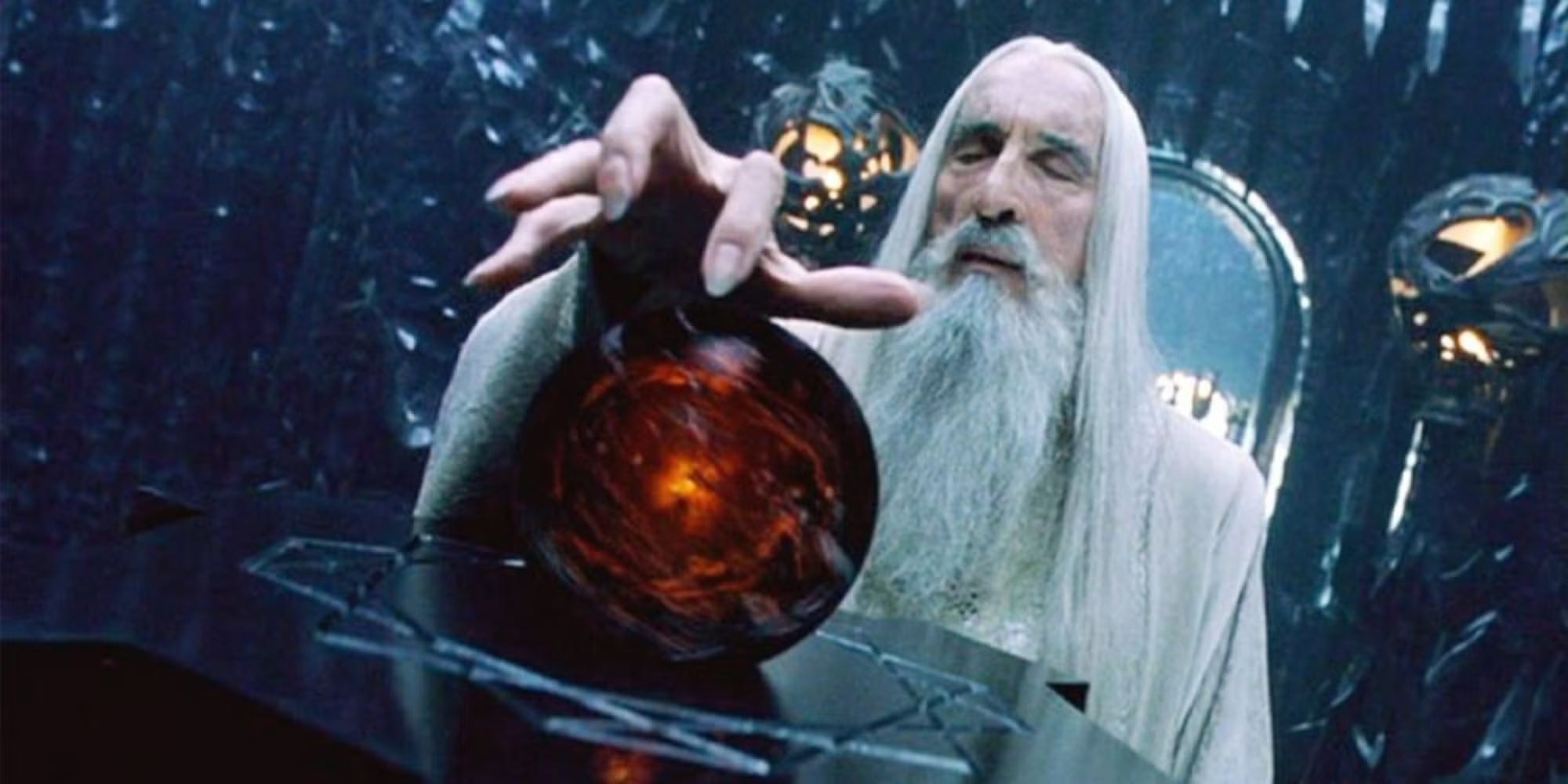
But, of course, Saruman is wrong. Massively wrong. He is unaware of it, but he is on the brink of ruin. Joining forces with Mordor briefly catapults him into unparalleled power…only to fall into utter humiliation. The powerful and wise Saruman becomes an impotent, two-bit criminal who dies an ignoble death.
The snake devours its own tail. Evil destroys itself—even when it seems to offer more wisdom, more hope, more guaranteed success than the (seemingly) foolish path of virtue. Why? Because, there was one factor Saruman fails to take into account in his calculations: God.10
Why is evil self-destructive? Because this is God’s world. And when you cut against the grain of His design—even if it seems to be the shortest path to power, the most secure means of success—you sow the seeds of your own destruction. The path of worldly wisdom and hope, is the path of foolishness and despair.
Sauron’s greatest folly in the trilogy is that he assumes that his enemies will wield the power of the Ring against him. Gandalf explains:
That we should try to destroy the Ring itself has not yet entered into his darkest dream…Wise fool. For if he had used all his power to guard Mordor, so that none could enter, and bent all his guile to the hunting of the Ring, then indeed hope would have faded: neither Ring nor bearer could long have eluded him.11
Sauron is wise, and therefore is a fool. He could not in “his darkest dreams” imagine someone freely choosing to deny the opportunity of Power, to destroy the most powerful piece of technology and magic in all of Middle-Earth. And thus, his worldly wisdom is his own undoing.
Be not wise in your own eyes; fear the LORD, and turn away from evil.
It will be healing to your flesh and refreshment to your bones.
(Proverbs 3:7-8)
The Wisdom of (Faithful) Folly
If worldly wisdom, worldly hope—trying to guarantee success by any means necessary, casting virtue and God aside if need be—ultimately leads to folly, to destruction, then that means that the path of virtue, of faithfulness, will often look like folly, like hope without guarantees.
This is where Tolkien shines. It is precisely here—in the doom of the hero tasked with a tragic quest, standing against impossible odds, the whole world calling him a fool—that the distinctly Christian nature of the work reveals itself.
The hero’s path in Lord of the Rings is the path of faithful folly. It is the journey through the Mines of Moria (from μωρία, Greek for “folly” and mori, Latin for “to die”)12 where Gandalf—the most powerful of the Fellowship—sacrifices himself to save the others. It is the “the Paths of the Dead” where Aragorn—the one leader needed most— takes the perilous journey under the cursed mountain when all warn him otherwise. It is the “fool’s hope” of sending the One Ring into the very land of the Dark Lord who seeks it, not with a great army, or strong captains or elf-lords, but with the diminutive hobbits of the Shire.
And yet, because these characters perform these deeds in accord with virtue, because they cut with the grain of the universe, sing in harmony with the Song, their doomed tasks—against all explanation—succeed, even as it costs them dearly. They face the Balrog and slip into darkness. Yet, as we will see later, there is hope “beyond the circles of this world.” After Good Friday, there is an Easter Sunday.
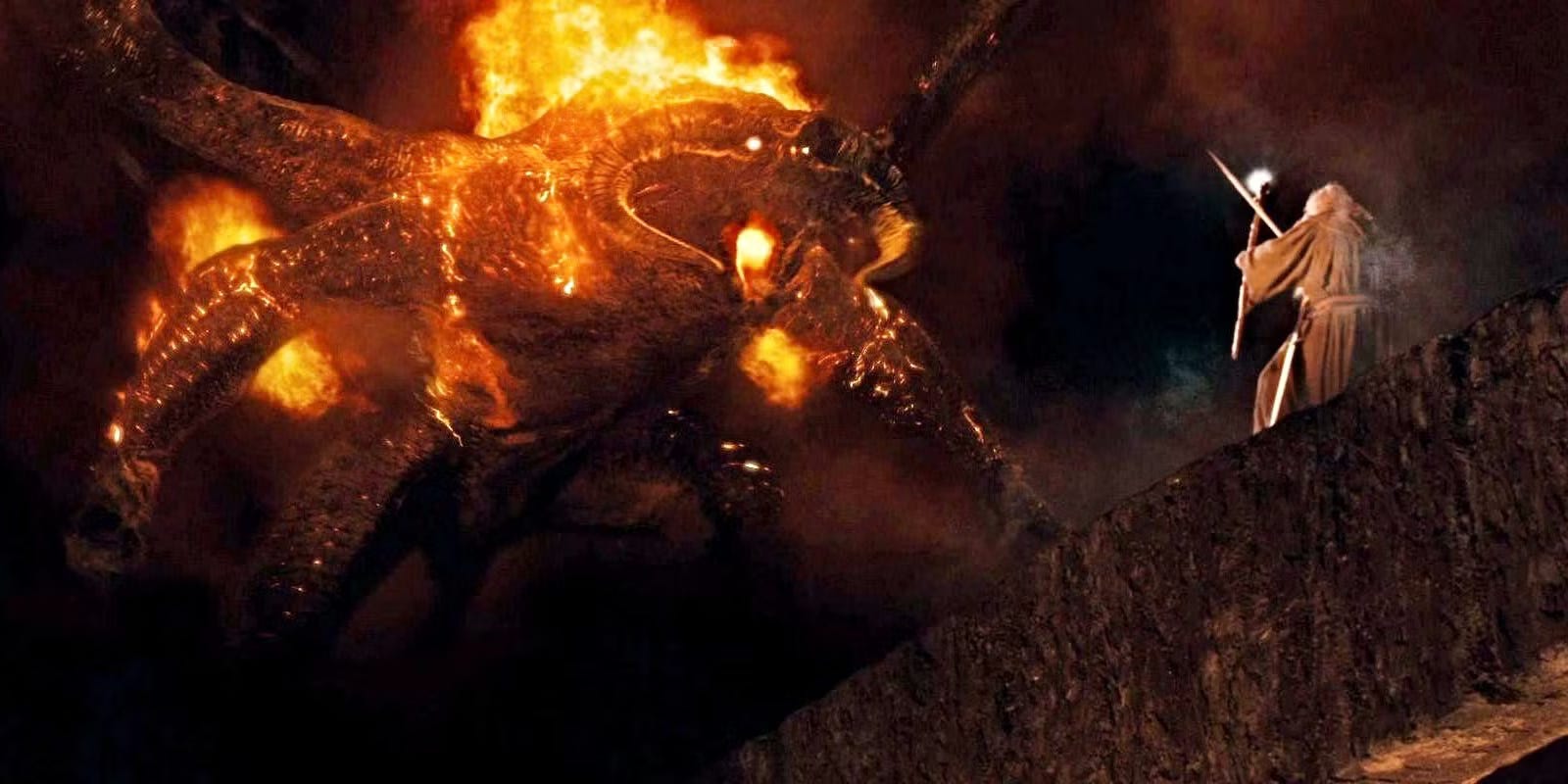
When faithfulness leads you into what looks like folly to the world, to defeat, to loss, Tolkien gives us imaginative fuel to continue to walk that path without despair.
Too often, we succumb to despair because we feel like we cannot guarantee success in life, because ordinary faithfulness seems “not to work” or put us more often in the crosshairs, rather than the seat of the powerful. And if we can’t see how faithfulness will produce the results we desire, we begin to lose hope, and sink into despair. And I know of few more powerful acids to weaken the moral resolve of the faithful than despair. If you come to believe that being faithful to your spouse, patient with your children, refusing to join in frenzy of greed in your workplace, or any other ordinary Christian virtue “won’t make any difference anyways,” then you’ll find your convictions beginning to weaken. Soon, the divorce, explosive anger, or dishonest practices will begin to feel inevitable. You’ll say: “I tried the path of faithfulness, and it didn’t work.”
But that’s Saruman’s line of thinking. That’s worldly wisdom, worldly hope. That’s forgetting that “Even the very wise cannot see all ends” and that “there are other forces at work in this world besides evil.”13 You do not know what your invisible and seemingly foolish acts of faithfulness will produce…nor can you anticipate the tragic cost of compromise.
The world may call Christians fools for insisting on our childlike commitment to virtue and our refusal to stain our hands with evil. And maybe we are. But if we are to be fools, let’s be faithful fools rather than worldly wise fools.
And while Tolkien’s work is fictional, it cuts to the heart of Ultimate Reality: the folly of the Cross (1 Cor 1:18-25).
The Letters of JRR Tolkien, ed. by Humphrey Carpenter and Christopher Tolkien, letter no. 181
Think of Legolas and Gimli, Sam and Frodo, Merry and Pippin. You could also think of the friendship theme established in The Hobbit among the company of dwarves, Gandalf, and Bilbo.
Aragorn, Theoden, Gandalf are all pictures of the need for wise authority, and Saruman, Denethor, and Sauron all ghastly images of authority and power gone sour.
The lust for the Ring and what it does to all in its vicinity: Bilbo, Boromir, Frodo, and above all, Gollum.
The Return of the King, “Minas Tirith”
The Hobbit, “Flies and Spiders”
The Fellowship of the Ring, “The Council of Elrond”
“I have spoken words of hope. But only of hope. Hope is not victory. War is upon us and all our friends…It fills me with great sorrow and great fear: for much shall be destroyed and all may be lost. I am Gandalf, Gandalf the White, but Black is mightier still,” (The Two Towers, “The White Rider”).
The Fellowship of the Ring, “The Council of Elrond”
Illuvatar, or Eru, in The Silmarillion
The Two Towers, “The White Rider”
I know that Moria is comprised of Tolkien’s elvish language, with its own etymology meaning “black pit.” But Tolkien knew his languages (Greek and Latin) too well to not have th
The Fellowship of the Ring, “Shadow of the Past”

 Marc Sims