The following below is a sermon manuscript; for an explanation of my sermon manuscripts, click here. *Originally preached in September 2021* Sermon Audio: Fear God (Micah 1:2-16) What weighs on your mind? What generates the deepest sense of unease and worry within you? There are many things we can be anxious about today, from things as … Continue reading Fear God (Micah 1:2-16)
Author: Marc Sims
“Love (III)” by George Herbert
Love bade me welcome. Yet my soul drew back Guilty of dust and sin.But quick-eyed Love, observing me grow slack From my first entrance in,Drew nearer to me, sweetly questioning, … Continue reading “Love (III)” by George Herbert
The Word of the Lord (Micah 1:1)
The following below is a sermon manuscript; for an explanation of my sermon manuscripts, click here. *Originally preached in September 2021* Sermon Audio: The Word of the Lord (Micah 1:1) The word of the LORD that came to Micah of Moresheth in the days of Jotham, Ahaz, and Hezekiah, kings of Judah, which he saw … Continue reading The Word of the Lord (Micah 1:1)
Tempted to Despair? Don’t Be a Denethor
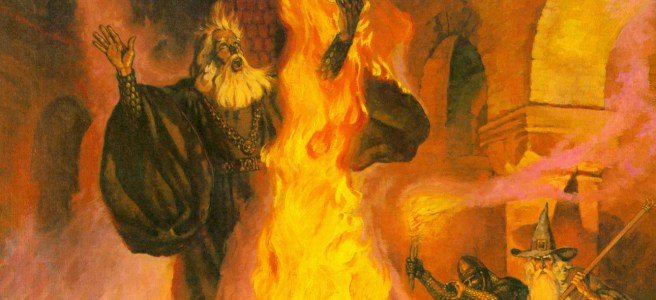
In the book of Revelation, aside from worship, the Church has two main functions in the world:- Testify to the truth of the Gospel- Be killed (Usually the first is what leads to the second) We can see this in a number of places (Rev 2:10, 13; 6:11; 11:4-13; 12:11; 13:7, 15). In the instance of … Continue reading Tempted to Despair? Don’t Be a Denethor
When Outopia Becomes Eutopia
When Thomas More wrote his classic political satire, Utopia (1516), he had some fun with the title. The word "Utopia" is a play on words in Greek: topos means "place", and and the prefix eu- in Greek means "good," so an eutopia is a "good place." But, in Greek there is also the prefix ou- … Continue reading When Outopia Becomes Eutopia
A Theology of the State
What does the Bible tell us government is actually for? Is it exclusively for punishing criminals or waging war? Or is it responsible to provide societal benefits and infrastructure? I have been greatly helped in thinking through these issues by the writings of Jonathan Leeman (PhD, University of Wales), particularly his books How the Nations … Continue reading A Theology of the State
10 Tips to Become a Better Reader
When I was younger, Peter Jackson's Lord of the Rings movies were releasing, and I remember someone recommending that I should try to read the books because they were far better. I (much to my later chagrin) responded, "Why read a book when you could just watch a movie?" For shame. For shame. If you know me now, … Continue reading 10 Tips to Become a Better Reader
Coram Homine: An Ethic of the Face
In 1984, Soviet Russia was waging war in Afghanistan, leading millions of Afghan refugees to flee into neighboring Pakistan. A young, 12-year-old Sharbat Gula, a Pashtun orphan had fled to the Nasir Bagh refugee camp on the Afghan-Pakistan border. Steve McMurray, a photographer working for National Geographic, was walking through the refugee camp when he … Continue reading Coram Homine: An Ethic of the Face
Coram Deo: A Theology of the Face
Face as Presence In the Bible often the word for "face" is a metonymy for "presence." Frequently our English translations actually translate the Hebrew and Greek terms for face (פָּנֶה, panėh; πρόσωπον, prosōpon) just with the word "presence". For example, "And they heard the sound of the Lord God walking in the garden in the … Continue reading Coram Deo: A Theology of the Face
Why The Brothers Karamazov Is Worth Reading
Why Reading Brothers is Hard The Brothers Karamazov can be an intimidating book to read. Dostoevsky's writing can seem strange at points. The explosive, dramatic, and perverse characters are jarring and often alienating; Dostoevsky's penchant for describing pathetic and emotionally painful scenes is unsettling; and the labyrinthine story with the ever-shifting Russian names, dense monologues, … Continue reading Why The Brothers Karamazov Is Worth Reading