

Our church has been going through the book of 1 Corinthians for some time now and we are just rounding the corner on 1 Corinthians 12, leading us into a lengthy discussion of spiritual gifts (charismata). Anyone who reads these passages (and other similar ones in the NT) are left with many questions. Should we expect to experience gifts of prophecy, tongues, and healings too?
There are basically two perspectives on this: continuationism and cessationism.
Continuationism is the view that all (or most) of the spiritual gifts we see practiced in the New Testament continue today.
Cessationism is the view that some of the spiritual gifts we see practiced in the New Testament have ceased.
In this article I will attempt to (briefly) summarize the best arguments for continuationism, and then in another I will do the same for cessationism.
(While there are a variety of different types of each of these positions, I will attempt to summarize the most fundamental arguments that are common across all stripes of continuationists and cessationists alike.)
While I remain ultimately unconvinced by the continuationist position, I do find the arguments for it very compelling, and admit that I could be wrong.
The Case for Continuationism
The defense of the continuationist position rides on three basic types of arguments: (1) Biblical, (2) Historical, and (3) Experiential.
Biblical Arguments
The strongest argument for the continuationist position comes from examining the teaching of the New Testament.
First, the New Testament nowhere teaches us that any of the spiritual gifts will cease. While 1 Corinthians 13:8 does say that there will be a time when prophecies, tongues, and knowledge will “pass away,” vs. 10 makes it abundantly clear that this occurs when “the perfect comes.” This is speaking of the beatific vision at the last day where we will see Jesus “face to face” (1 Cor 13:12; cf. 1 John 3:2). Cessationists will sometimes argue that the “perfect” here refers to the closing of the canon of Scripture, but their arguments ignore the immediate context of the passage. Paul seems to clearly anticipate that spiritual gifts will continue till Christ returns.
Second, the abundance of teaching on spiritual gifts in the epistles naturally leads us to believe that they should continue today. Why would the Holy Spirit devote so much space in Scripture to subjects that would shortly cease to be relevant? (1 Cor 12-14; Rom 12:3-8; Eph 4:8-12; 1 Thess 5:19-22; 1 Pet 4:10-11; cf. 1 Tim 1:18; 4:14)
Third, Jesus promises that His disciples will perform signs and wonders similar to His own: they will heal diseases and cast out demons (Matt 10:1; Mark 3:15; 6:7; Luke 9:1). And while all of those passages are limited to the twelve, Luke 10 describes the 72 who “heal the sick” (Luke 10:9). Further, notice how expansive Jesus makes His promise in John 14: “Truly, truly, I say to you, whoever believes in me will also do the works that I do; and greater works than these will he do, because I am going to the Father,” (John 14:12).
Fourth, we see this promise realized in the book of Acts where the apostles perform “signs and wonders” (Acts 2:43) like Christ did. And not only the apostles, but individuals like Philip. When he travels to Samaria, he earns a hearing when the crowds, “saw the signs that he did. For unclean spirits, crying out with a loud voice, came out of many who had them, and many who were paralyzed or lame were healed,” (Acts 8:6b-7).
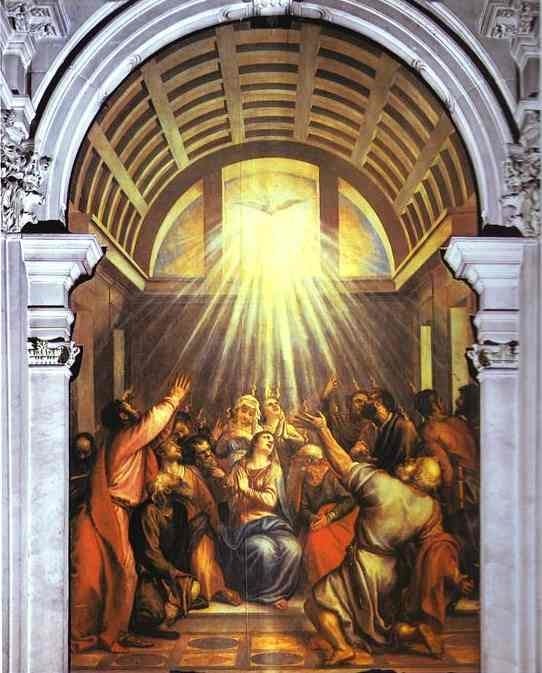
Fifth, when the Holy Spirit is first given at Pentecost and the church begins to speak in tongues, Peter interprets these events as the fulfillment of the prophecy of Joel 2 that describe how “in the last days” God will pour out His “Spirit on all flesh…and they shall prophesy,” and God will “show wonders in the heavens above and signs on the earth below,” (Acts 2:17-19; cf. Joel 2:28-32). This is critical because it shows that the “signs and wonders” being demonstrated in the church at Pentecost should characterize the “last days,” the period of time contained between the first and second coming of Christ. In other words, Peter assumes that until Jesus returns, between Pentecost and Parousia, the Holy Spirit will continue to manifest His work with “signs and wonders,” like tongues, prophecy, and miracles.
Sixth, the New Testament warns us of individuals who will attempt to restrict charismatic experiences. Paul tells the Thessalonians to not “quench the Spirit” and then immediately explains, “Do not despise prophecies,” (1 Thess 5:19-20). Presumably, to despise prophecies is a way in which we can “quench the Spirit.” Further, Paul teaches the Corinthians, “do not forbid speaking in tongues,” (1 Cor 14:39b).
Seventh, the New Testament teaches us to desire spiritual gifts in earnest. Paul tells the Corinthians to “earnestly desire the higher gifts,” (1 Cor 12:31), to “earnestly desire the spiritual gifts, especially that you may prophesy,” (1 Cor 14:1), and to “earnestly desire to prophesy,” (1 Cor 14:39). And again, he tells the Corinthians, “Now I want you all to speak in tongues, but even more to prophesy,” (1 Cor 14:5). If tongues and prophecy cease, why would we repeatedly be told to pursue these gifts?
Historical Arguments
Typically, church history is used as an argument to discredit the continuationist position, since it emerged almost exclusively in the 20th century. But Andrew Wilson, in an article in Themelios, points to the testimony of the post-apostolic church. He argues, “I am not aware of any writer before Chrysostom or Augustine making a cessationist argument about any of the gifts.” And then proceeds to provide evidence of the exercise of the gifts in the early church:
Justin Martyr claimed, ‘The prophetical gifts remain with us, even to the present time.’3 Irenaeus said, ‘Those who are in truth his disciples’ performed miracles according to the gift given them, including driving out demons, seeing visions, uttering prophetic expressions, healing the sick, raising the dead, speaking in other languages, and declaring the mysteries of God.4 (Eusebius uses this excerpt to demonstrate that ‘various gifts remained among those who were worthy even until that time.’5) Tertullian trash-talks Marcion, like Elijah on Mount Carmel, by daring his god to predict things to come, make manifest the secrets of the heart, interpret tongues or prophesy, before claiming that ‘all these signs are forthcoming from my side without any difficulty.’6 Origen regarded the scope of the gifts as having diminished but certainly not disappeared: ‘there are still preserved among Christians traces of that Holy Spirit which appeared in the form of a dove. They expel evil spirits, and perform many cures, and foresee certain events, according to the will of the Logos.’7 Basil the Great said, ‘The Spirit enlightens all, inspires prophets, gives wisdom to lawmakers, consecrates priests, empowers kings, perfects the just, exalts the prudent, is active in gifts of healing, gives life to the dead, frees those in bondage, turns foreigners into adopted sons.’8 Cyril of Jerusalem explained, ‘He employs the tongue of one man for wisdom; the soul of another he enlightens by prophecy; to another he gives power to drive away devils.’9 And Augustine, as we know, lists an extraordinary range of healings from blindness, rectal fistula, breast cancer, gout, paralysis, hernia, demonization and even death.10
Wilson concludes with an excerpt from Charles Spurgeon’s autobiography where Spurgeon shares a sensational experience that took place while he was preaching:
While preaching in the hall, on one occasion, I deliberately pointed to a man in the midst of the crowd, and said, ‘There is a man sitting there, who is a shoemaker; he keeps his shop open on Sundays, it was open last Sabbath morning, he took ninepence, and there was fourpence profit out of it; his soul is sold to Satan for fourpence!’
The man explains:
I did take ninepence that day, and fourpence was just the profit; but how he should know that, I could not tell. Then it struck me that it was God who had spoken to my soul through him, so I shut up my shop the next Sunday. At first, I was afraid to go again to hear him, lest he should tell the people more about me; but afterwards I went, and the Lord met with me, and saved my soul.
Spurgeon again:
I could tell as many as a dozen similar cases in which I pointed at somebody in the hall without having the slightest knowledge of the person, or any idea that what I said was right, except that I believed I was moved by the Spirit to say it; and so striking has been my description, that the persons have gone away, and said to their friends, ‘Come, see a man that told me all things that ever I did.’17
While Spurgeon himself never claimed to possess the gift of prophecy or word of knowledge (and, significantly, was himself a cessationist), it is hard to explain accounts like this without resorting to some supernatural revelation God had provided.
Experiential Arguments
This is a kind of ‘brute fact’ argument. Basically, hundreds of millions of Christians around the world claim to experience the charismata, including prophecy, speaking in tongues, healing, exorcising demons, words of knowledge, and miracles. Pentecostalism is the fastest growing denomination of Christianity around the globe, brimming with adherents who claim first-hand experience to all of these supernatural experiences.
Of course, we must take into account that there are many imposters out there who use gimmicks and tricks to replicate miracles. Jesus Himself warned of “false christs and false prophets” who would arise and employ “signs and wonders” (Mark 13:22) to attempt to deceive the elect.
But even if we maintained a high-bar of skepticism, there still would be scores and scores of testimonies that could not be easily dismissed. Andrew Wilson, in another article responding to a cessationist’s critique of his position, states:
Cards on the table: I have personally witnessed a large number of miracles like this. Blindness, deafness, paralysis, unlearned earthly languages being spoken (in one recent case, a Rwandan tribal language that was being spoken by a white British girl in our prayer meeting, and understood by a native speaker of that language standing a few feet away), life-long conditions, the whole kit and caboodle—not third-hand stories from Majority World countries, but in front of me in the UK—and many of the healings have subsequently been verified by medical staff, which is something we always encourage. (In my favourite story, which was featured in the national press in the UK, the government continued paying disability benefits to a wheelchair bound lady even after she had been completely healed. When she rang to say she no longer needed the money because she could walk again, the bureaucrat at the government department said, ‘We haven’t got a button to push that says “miracle”.’) I agree…that such things are rarer than they were in Acts—but then so are sermons that see 3,000 people saved, and so are missionaries who plant churches from Jerusalem round to Illyricum. That is not a reason to seek those things less; it is a reason to seek them more.
What can one say to reports like that? It would be the height of arrogance to stubbornly insist that he must be mistaken, that all of those miraculous signs and wonders were all counterfeit.
Conclusion
There are many more arguments that could be presented, but these represent the most basic and, in my opinion, the most persuasive. The evidence for the continuationist perspective is formidable and could be correct. We should all exercise great humility in this arena. Nevertheless, I remain more persuaded of a nuanced cessationist perspective. There are considerable problems with the continuationist position that can be explained more persuasively by the opposite position, a position I will examine next.

 Marc Sims
2 thoughts on “The Best Arguments for Continuationism”