
There are few things more emotionally charged and divisive than the issue of abortion. What makes it particularly difficult is that each side of the divide relies on emotional pleas, personal anecdotes, and shock factors to try and bludgeon one another into submission.
And this actually makes sense. We are not thinking-machines or brains on sticks. We are embodied, whole persons—heart, soul, and mind. We need to think about the emotional realities individuals face. But we need the passions of emotion to be bridled by reason, so let’s try to think about the issue as systematically and logically as we can before we vent our passions.
The Pro-Life Argument
- The unwarranted killing of a human being is wrong.
- The child in the womb is a human being.
- The killing of a child is normally unwarranted.
- Therefore, abortion is wrong.
That is the basic moral logic behind the pro-life position. Let’s examine each premise more carefully.
Premise #1: The unwarranted killing of a human being is wrong.
This is axiomatic. It is self-evidently true. Christians, and other religions, point to the sacrality of human life as the basis for this axiom (Gen 9:6). Secular individuals may make communitarian or evolutionary arguments, for example, “Society cannot function without cooperation; murder dissolves society, ergo murder is wrong.” This leads us to ask, “What does ‘unwarranted’ mean?” This means that there are certain scenarios where the taking of life is justified, but only where the taking of life is for the sake of preserving more life. For example, just wars, capital punishment, lethal force in self-defense or to stop a criminal intent on killing. (Pacifists, of course, would disagree and simply state that all killing of human beings is wrong)
Premise #2: The child in the womb is a human being.
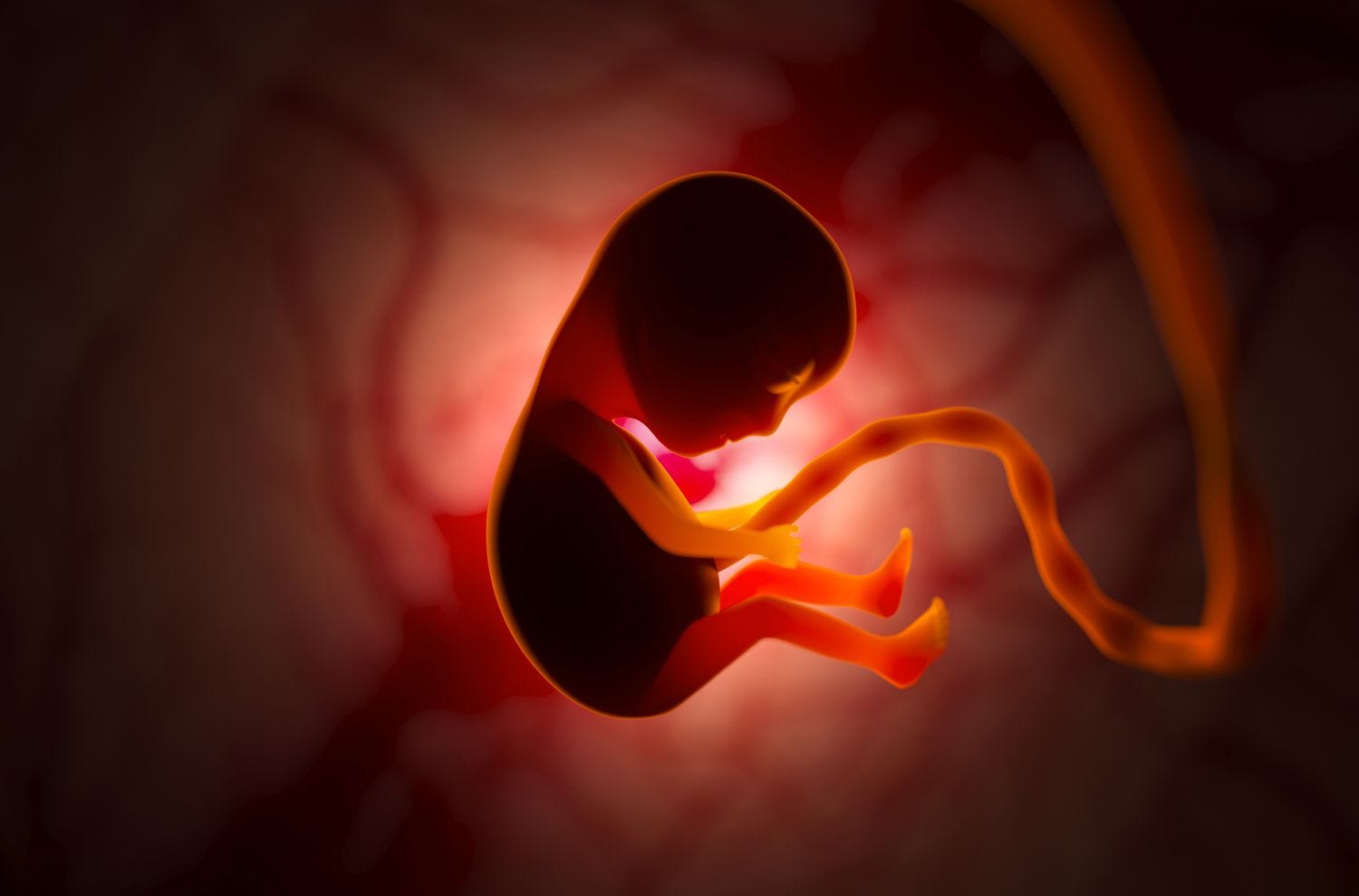
Biologically, a human being comes into existence at the point of conception. The embryo has all of the necessary biological requirements to classify it as a member of the species “human being,” even if it is still developing. Personhood is not limited to the functions a person can accomplish, but tied to their identity as a member of the human species. We do not deny newborn babies, toddlers, the mentally handicapped, or elderly their status as persons, even though they lack certain cognitive and motor functions that other persons have, or because they are more dependent on others for survival.
Premise #3: The killing of a child is normally unwarranted.
What does “normally unwarranted” mean? If premise #1 is true, then if a woman’s pregnancy is going to result in the death of the mother and/or the death of the child, then an abortion could be morally permissible. However, this is the exception. Normally, in nearly all circumstances, the killing of a child is wrong. In fact, we would normally say it is especially wrong because children are defenseless and normally rely on the care of their parents for survival. When we hear of tragic stories in the news of parents murdering their own children, we all intuitively sense this is more morally outrageous than if one adult killed another adult.
Conclusion: Abortion is wrong.
Abortion is normally the unwarranted killing of a child. A child is a human being. It is wrong to kill a human being. Therefore, abortion is wrong.
To invalidate the pro-life argument, someone would need to prove that at least one of the three premises are false: The unwarranted killing of a human being is not wrong; The child in the womb is not a human being or not person; The killing of a child is not normally unwarranted. Generally, pro-choice candidates focus on refuting the second premise, and at times, the third.
The pro-life advocate could also posit this argument:
- Laws exist for the protection of life and society.
- Children are members of society.
- Abortion is the destruction of life.
- Therefore, laws should restrict abortion.
Premise #1: Laws exist for the protection of life and society
Similar to the first premise in the previous argument, this is a self-evidently true statement. We feel outraged when we discover that certain laws are aimed at helping only a special class of society (think of segregation laws), or are used to destroy life (think of slavery laws). We believe that the rule of law is here to create a society where all flourish and life is protected.
Premise #2: Children are members of society
Children, whether outside or inside the womb, are not in a sub-personhood status. They are part of the society that our laws should work to protect. Further, since children cannot stand up for themselves—especially those in the womb—our laws should especially be used to protect them from being taken advantage of.
Premise #2: Abortion is the destruction of life
Abortion is the deliberate killing of human life. Unrestricted abortion is using the law to help a special class of society (adults) to destroy the life of degraded class of society (the unborn).
Conclusion: Laws should restrict abortion
Since the unborn represent a class of society who are highly vulnerable, who cannot defend themselves, and are more likely than any other class of person to be killed, then our laws should guard and protect them.
For pro-choice advocates to invalidate this argument they need to demonstrate that at least one of these premises are false: Laws do not exist for the protection of life and society; Children are not members of society; Abortion is not the destruction of life.
The Pro-Choice Argument
A pro-choice advocate may respond with their own argument
- An embryo in the womb is not a person.
- The termination of non-persons is not wrong.
- Therefore, abortion is permissible.
This is the basic pro-choice response to the pro-life argument.
Response #1: An embryo in the womb is not a person.
While an embryo at the point of conception is biologically a member of the human species, it does not yet result in it being a person. Personhood is admittedly difficult to define, but a pea-sized embryo that is entirely dependent on the mother for life seems to lack personhood, at least in the way a newborn infant seems to possess it.
Response #2: The termination of non-persons is not wrong.
Society largely agrees that the termination of germ life, plant life, or animal life for the sake of our own comfort and survival is morally permissible. So too, we should not feel any moral prohibitions in the termination of non-personal biological life, like that of a fetus or embryo.
Conclusion: Abortion is permissible
Since abortion is permissible, there should be no laws restricting access to abortion.
For pro-life individuals to invalidate this argument they must show that at least one of these premises are false: An embryo in the womb is a person; The termination of non-persons is wrong. Pro-life individuals tend to focus on refuting the first premise.
Not only would pro-choice candidates have this response, but they could positively put forward their own argument as well:
- Human beings are entitled to bodily autonomy
- An unwanted pregnancy surrenders bodily autonomy
- Therefore, abortion is permissible
Premise #1: Human beings are entitled to bodily autonomy
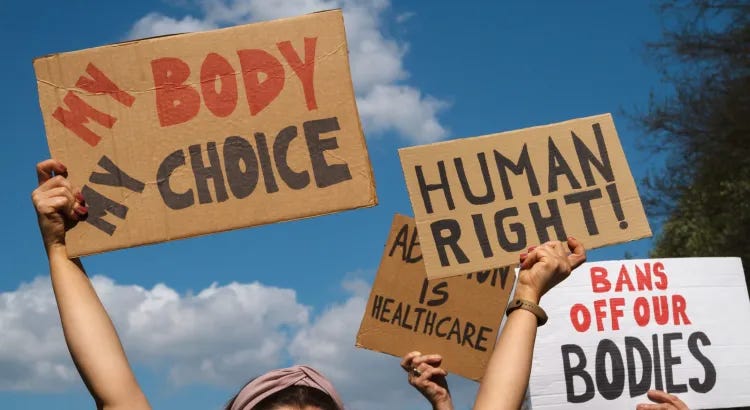
Much like pro-life advocates believe that “murder is wrong” is axiomatic, so too do pro-choice advocates argue that bodily autonomy is axiomatic. We intuitively sense that when someone is coerced against their will to do something, it is wrong. Many of our laws are predicated on this idea. For instance, rape, assault, and kidnapping are crimes because they imply that one party overrode the will of the other, violated their bodily autonomy. Hence, the “my body, my choice” mantra of the pro-choice movement.
Premise #2: An unwanted pregnancy surrenders bodily autonomy
A woman becoming pregnant when she does not desire to become pregnant compromises her bodily autonomy severely. Her entire life now must change, though she does not desire it. While all pregnancies compromise bodily autonomy (children cannot survive without a mother giving up her bodily freedom), the mother who desires to do so has willingly surrendered that autonomy, while the woman with the unplanned pregnancy hasn’t.
Conclusion: Abortion is permissible
Notice, this argument does not depend on the personhood status of an embryo. An individual could accept that the child in the womb is both a human and a person, but could claim that the loss of bodily autonomy is a greater evil than the death of the child. For a woman to enjoy full bodily autonomy—including sexual autonomy—abortion must be available to her.
For a pro-life advocate to invalidate this argument they would have to show at least one of these premises is wrong: Human beings are not entitled to bodily autonomy; An unwanted pregnancy does not surrender bodily autonomy. Most pro-life advocates would focus on responding to the first premise.
Conclusion
Chanting out slogans and throwing around insults will not help us wade through this. We need to realize that life and death quite literally hang in the balance, so we need to think clearly and consistently. If pro-life and pro-choice advocates want to persuade one another, they must understand each other’s arguments and then respond to them in their strongest form.
I believe that the pro-life position is far more persuasive and morally consistent, not to mention in line with my convictions as a Christian, but the pro-choice side needs to be heard on its own terms. I’ll attempt to respond to these arguments above in my next post.

 Marc Sims